DISABLED PEOPLE ARE “PROTECTED”.
But which disabled people?
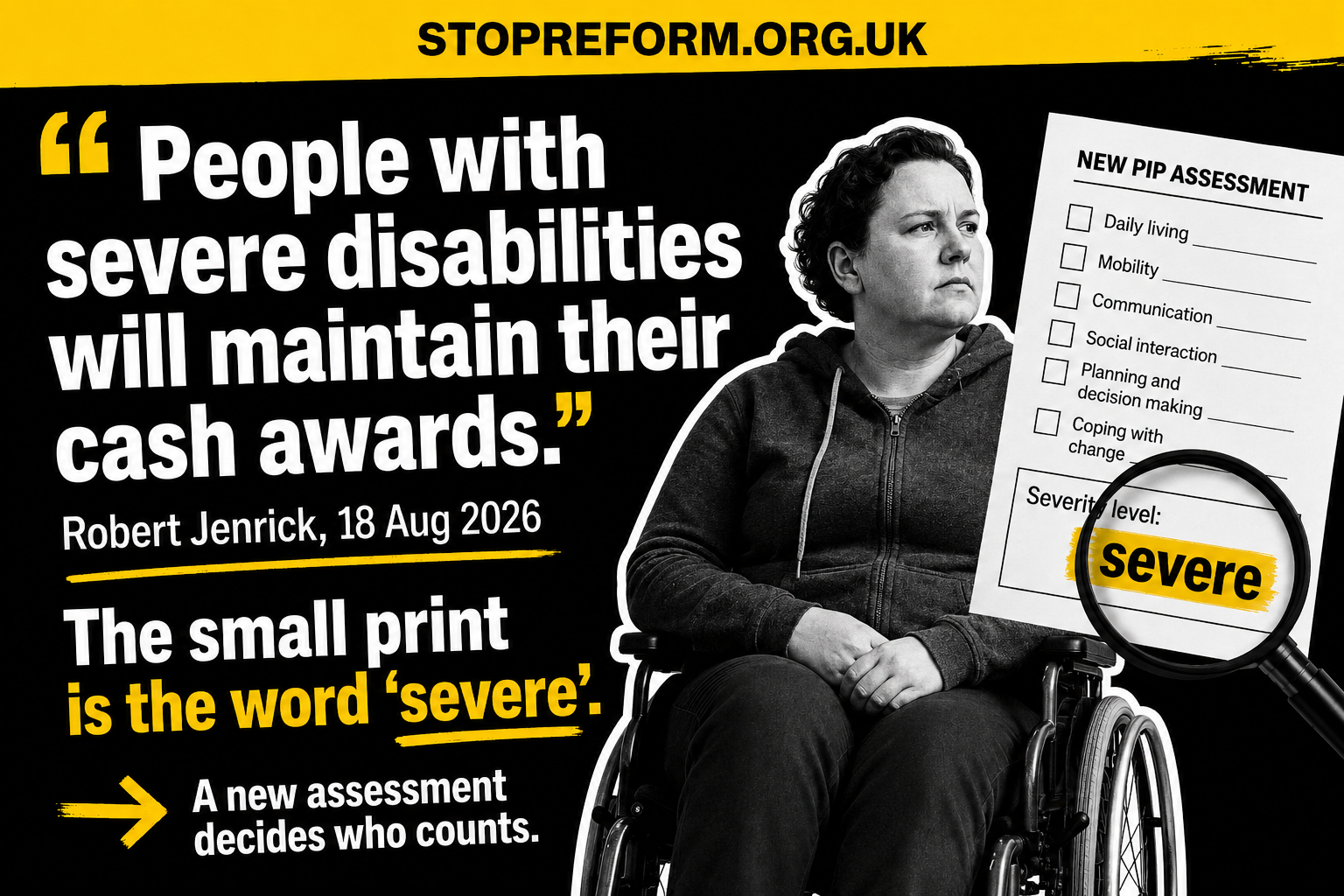
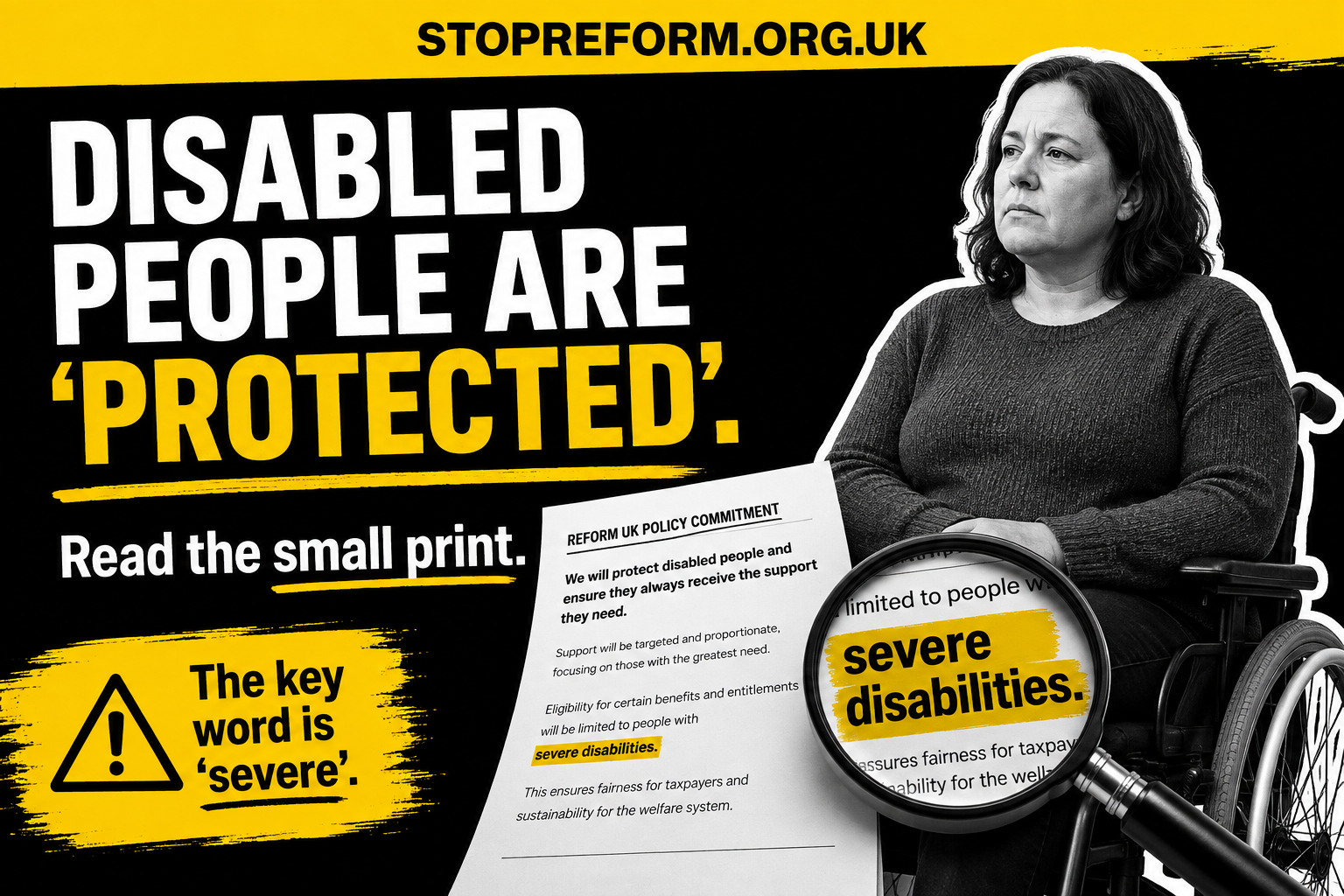
The comforting headline in Reform's welfare plan is that children, pensioners and people with severe disabilities will keep cash awards. The important words are "severe disabilities". Reform is proposing a new assessment, reassessment of existing cases and a different support model for people who do not meet its severe threshold.
The comforting headline in Reform's welfare plan is that children, pensioners and people with severe disabilities will keep cash awards. The important words are "severe disabilities". Reform is proposing a new assessment, reassessment of existing cases and a different support model for people who do not meet its severe threshold.
The key issue
- Reform says severely disabled people will retain cash awards.
- It proposes one Disability Needs Assessment replacing existing PIP and Universal Credit health assessments.
- The plan subjects some mental-health and other claims to greater scrutiny and reassessment.
- The policy modelling assumes major savings from disability and health-related support, so the definition of severe is central, not incidental.
What they said
Reform UK Shadow Chancellor
Reform UK
What Reform actually proposes
Making Welfare Work replaces the current PIP assessment and Universal Credit Work Capability Assessment with a single Disability Needs Assessment. The party says support should be concentrated on people with the most serious needs and that employers should carry more responsibility when people leave work because of ill health.
Severe is doing a lot of work
A person can have a serious, expensive and life-limiting condition without being unable to do everything. Multiple sclerosis, epilepsy, Crohn's disease, rheumatoid arthritis, chronic pain, autism, Parkinson's, bipolar disorder and many other conditions vary enormously between people and over time. The key question is not whether somebody has a diagnosis. It is how Reform defines the threshold that keeps unrestricted cash support.
Cash versus verified costs
For people outside the protected severe category, Reform proposes moving towards support for verified additional disability costs rather than simply preserving the existing cash-benefit model. That may sound targeted, but cash disability benefits also cover the messy reality of living with impairment: transport, heating, help, replacement items, food, lost flexibility and costs that are difficult to invoice neatly.
Mental health
Reform has specifically highlighted conditions including anxiety, depression and ADHD for greater scrutiny. Fraud should be challenged in every benefit. But a diagnostic category is not evidence of fraud. Any reassessment system needs clinically credible criteria, appeal rights and recognition that mental illness can be profoundly disabling even when there is no visible physical impairment.
Our assessment
It is reasonable to reform assessments that are inconsistent or easy to game. It is also reasonable to help people who can work into suitable employment. But "protecting the severely disabled" is not the same as protecting disabled people. Reform should publish clear thresholds, worked examples and distributional analysis showing exactly how many disabled people gain, lose or move from cash to restricted support.
Sources
We separate Reform’s own policy and statements from outside reporting and our analysis. Sources checked when this article was prepared.