REFORM WANT TO PRIORITISE MARRIAGE.
What happens to everyone else?
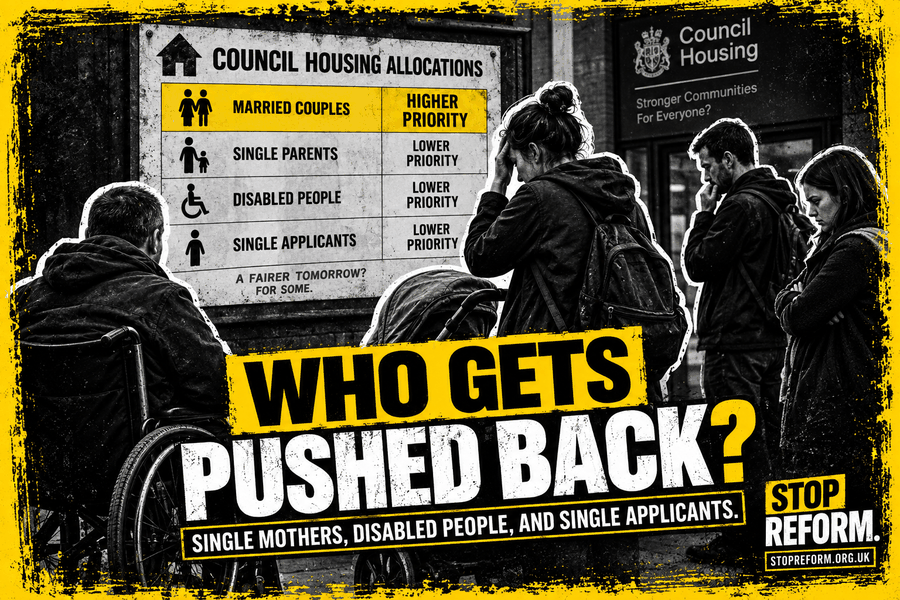
Reform has identified a genuine problem: a need-based system can sometimes make a household appear better off separated than together. That deserves fixing. Reform's answer is to make marriage a core allocation factor. That means the state deliberately gives one legal relationship additional weight over an unmarried couple, a separated parent or another household with the same housing need.
Reform has identified a genuine problem: a need-based system can sometimes make a household appear better off separated than together. That deserves fixing. Reform's answer is to make marriage a core allocation factor. That means the state deliberately gives one legal relationship additional weight over an unmarried couple, a separated parent or another household with the same housing need.
The key issue
- Reform says marriage will become a core allocation factor for social housing.
- Its stated aim is to stop a system it says penalises couples who stay together.
- The proposal does not simply reward couples. It rewards married couples over otherwise comparable unmarried households.
- A fairer alternative is to remove anti-couple incentives without making a marriage certificate a housing advantage.
What they said
The problem Reform is trying to fix
Housing and benefits systems based heavily on immediate need can create bad incentives. A lone parent or separated household can appear to have greater need than a couple sharing income and accommodation. It is reasonable to ask whether the system treats stable couples fairly.
But marriage is not the same as need
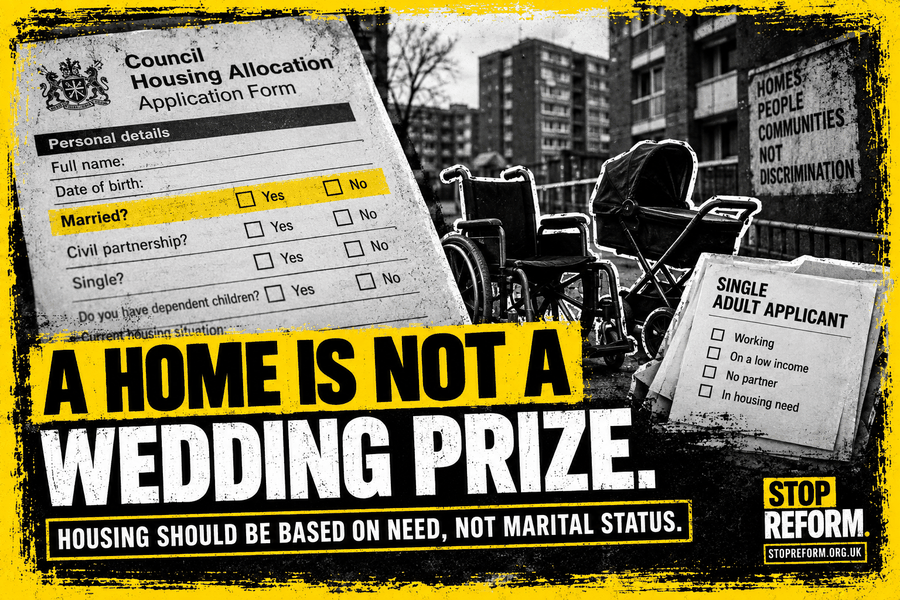
Consider two couples who have lived together for 20 years. One married, one did not. Their children, income, local connection and housing circumstances can be identical. Reform proposes giving the married household additional weight. That is not fixing an anti-couple incentive. It is creating a new preference based on marital status.
Who could lose relative priority?
Long-term unmarried couples, divorced parents, separated parents rebuilding their lives, single parents, couples saving for a wedding and people who simply do not wish to marry could all find themselves ranked differently from married households. Reform can argue marriage has social value, but social housing allocation decides who gets a scarce public home. The justification needs to be stronger than a moral preference.
A better balance is possible
We agree that policy should not punish couples for staying together. Benefits and housing rules can be redesigned so households are assessed fairly without manufacturing a financial incentive to separate. But equalising treatment is different from giving a married couple a state-backed advantage over an unmarried couple with the same practical circumstances.
Our assessment
The diagnosis contains truth. The remedy goes too far. Reform should explain precisely how much extra priority marriage receives, whether civil partnerships are identical, how children are weighted, and why a legal relationship should outweigh comparable housing need. Until then, this is a deliberate preference for one family structure over another.
Sources
We separate Reform’s own policy and statements from outside reporting and our analysis. Sources checked when this article was prepared.